Profile №6 BEHI-P006-RRC
Robert Reed Church Sr.
1839–1912
Entrepreneur · Real estate investor · Civic institution builder
Overview
TAKEAWAY: Church’s career connects Memphis businesses, property, and Black civic institutions. Institutional accounts provide context; deeds, accounts, and bank records are needed for precise financial claims.
OVERVIEW
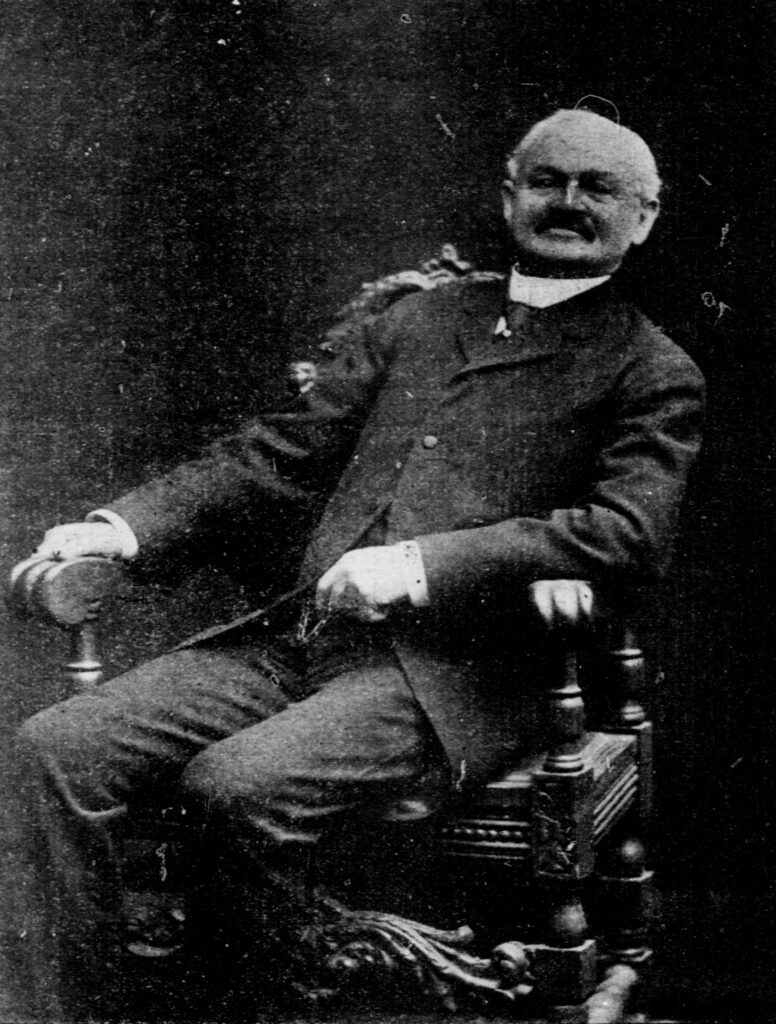
Portrait: published in The Colored American, June 13, 1903, page 1. Photographer and photography date unknown; public domain in the United States. Image provenance.

Robert Reed Church Sr. built businesses and acquired property in Memphis after slavery. His career connects commercial enterprise with the creation of Black civic space and financial institutions. THS biography and NMAAHC business interpretation provide institutional interpretations; they are not substitutes for his deeds, accounts or bank charter.
This audit distinguishes documents actually inspected from earlier research notes, catalog leads and unanswered requests. The original 1867 federal tax images recovered for this project name “Church Lou” and “Church C.B.”; neither is established here as Robert Reed Church.
Church’s reputation as a millionaire is historically significant. His precise wealth, ranking and the timing of that wealth remain unresolved. The 1915 estate opinion offers a qualified estimate, not a lifetime balance sheet.
Church’s enterprise: four connected arenas
Commerce
Hospitality and other commercial activity created a base for enterprise. Directory entries can establish a business presence; they do not independently prove title or profit.
Property
Real estate supplied a durable arena for investment. Ownership, purchase dates, and parcel values require deeds and other property records.
Civic space
Church Park and its auditorium connected property development with Black public life. Cultural importance can be described without inventing attendance or revenue.
Banking
Solvent Savings Bank and Trust extended the institutional story. Bank resources must remain separate from Church’s personal estate.
Reading key: documented records, institutional accounts, research leads, and interpretation carry different evidentiary weight. The profile identifies those differences rather than treating every claim as an audited fact.
KEY ECONOMIC INDICATORS
Institutional chronology; project accounts pending.
Qualified judicial estimate; inventory and liabilities pending.
December 31 statement locator; original uninspected.
EXACT ACCOMPLISHMENTS
Institutional histories describe businesses and property investment in Memphis.
THS dates the park project to 1899; costs remain unverified.
Church’s banking role is attributed; 1906 / 1908 formation dates require original records.
What Would Move This Profile Forward?
These are the next evidence priorities for strengthening this Profile. Each identifies a concrete research step and what it could help establish.
- Inspect the personal financial statements
Confirm the MSS 71, Box 1, Folder 4 locator and obtain complete statements and schedules. These would provide direct evidence of dated assets, liabilities and business results.
- Separate bank finances from personal ownership
Recover the December 31, 1910 bank statement, charter and individual stock records. These would distinguish institutional resources from Church’s shareholding.
- Complete the 1912 estate file
Obtain the inventory, appraisal, debts and executor settlements. These would support a reconciled estate value and documented succession.
- Connect property and tax entries to the correct person
Match original deeds with census, directory and household records for the relevant names and addresses. These would help resolve whether the inspected Church Lou and Church C.B. tax entries concern Robert Church.
Read the Research Gaps & Open Questions for the unresolved issues and evidence limits. New material is reviewed before claims or classifications change.
THE RECEIPTS OR EVIDENCE SUPPORTING THIS PROFILE
Evidence labels apply to individual claims. Read the evidence guide and content-condition definitions.
| SOURCE / LOCATOR | RECORD / CONTEXT | DATE / PERIOD | EVIDENCE STATUS | SUPPORT / LIMITS |
|---|---|---|---|---|
| THS · Church biography | Institutional interpretation | 1839–1912 career | ATTRIBUTED | Commercial career and 1899 park chronology; costs and wealth rankings remain attributed. |
| THS · Solvent Savings | Institutional interpretation | 1906 and later | ATTRIBUTED | Reports 1906 founding. Later bank resources are not Church’s personal wealth. |
| Napier v. Church | Published court opinion | May 29, 1915 | ESTIMATED | Estate described as probably $600,000; qualified judicial estimate, not audited lifetime net worth. |
| NARA · RG 58 tax images | Inspected archival images | March / Annual 1867 | VERIFIED | Box 13, pp. 60 and 10: Church Lou, 56 Court; Church C.B., 512 Front. Verification covers visible names, addresses and headings; identity as Robert unresolved. |
COMMERCE, CIVIC SPACE & FINANCIAL INSTITUTIONS
Church’s record connects commercial activity with property, a gathering space and a bank. BEHI examines each institution separately before interpreting how they contributed to Black economic life.
The same evidence standard applies throughout: institutional accounts are attributed, inspected tax transcriptions have narrow verification, and unanswered questions remain open.
Background
TAKEAWAY: Church’s early life and move to Memphis are described in institutional accounts. Louisa Church’s business activity must retain its separate attribution.
BACKGROUND
Tennessee State University biography places Church’s birth in Holly Springs on June 18, 1839. NMAAHC business interpretation describes his birth under slavery and his move to Memphis with Louisa in 1865. These are attributed institutional accounts.
The Memphis business story includes Louisa Church’s work. Her beauty enterprises should not be silently absorbed into Robert’s individual accomplishments.
Earlier directory research identified Church & Carnes, a saloon and billiard business at 81 DeSoto, in the 1867 directory. The preserved transcription also gives Robert’s residence as 10 Ruth. The exact directory image and page must be recovered before these entries receive primary-document verification.
Family relationships and inheritance require their own record chain. The later Napier litigation addresses an inheritance dispute shaped by slavery-era marriage law; it should not be used as a complete family biography.
Background: people, places, and evidence
- 1839
Birth under slavery
Tennessee State University’s institutional account places Church’s birth on June 18 in Holly Springs.
- Before Memphis
River work
The cabin-boy and steward narrative comes from the Tennessee Historical Society’s account; it is an attributed biographical strand.
- 1865
Memphis with Louisa
The Smithsonian account places Robert and Louisa Church in Memphis after slavery. Louisa’s beauty enterprises deserve their own recognition.
- 1867–1874
Directory research
Earlier transcriptions point to Church & Carnes at 81 DeSoto and later business activity at 374 Second. Original directory pages remain recovery targets.
Household history is not a single-owner business ledger. Louisa’s work, Robert’s commercial activity, and later family inheritance questions should be traced separately.
HISTORICAL & ECONOMIC CONTEXT
Institutional accounts place Church’s early life under slavery and his subsequent business career in Memphis.
Louisa’s beauty businesses and Robert’s commercial ventures require individual attribution.
Business addresses, households and parcels must be traced with different records.
FORMATIVE EXPERIENCES
THS describes work on riverboats before his Memphis business career; this is an attributed biographical account.
Earlier research identifies Church & Carnes in the 1867 directory; the exact page must be recovered.
Institutional histories describe real-estate investment; deeds are needed to establish parcels, dates and consideration.
THS describes work on riverboats before his Memphis business career; this is an attributed biographical account.
Earlier research identifies Church & Carnes in the 1867 directory; the exact page must be recovered.
Institutional histories describe real-estate investment; deeds are needed to establish parcels, dates and consideration.
BEHI uses context to explain the business environment. A residence listing does not establish title, and a family enterprise does not assign every contribution to one person.
PLACES, PEOPLE & INFLUENCES
| SOURCE | DESCRIPTION | DATE | EVIDENCE CLASSIFICATION | NOTES |
|---|---|---|---|---|
| THS · Church biography | Institutional interpretation | 1839–1912 career | ATTRIBUTED | Commercial career and 1899 park chronology; costs and wealth rankings remain attributed. |
| Tennessee State University · Church | Institutional biography | 1839–1912 career | ATTRIBUTED | Reports 1908 bank founding; reconcile with charter, organization and opening records. |
| NMAAHC · Starting Businesses | Institutional interpretation | 1865–1866 context | ATTRIBUTED | Robert and Louisa’s enterprises and the shooting; not an audited damage or loss account. |
WORK, FAMILY & BUSINESS LOCATIONS
The recovered 1867 directory transcription lists Robert at 10 Ruth and Church & Carnes at 81 DeSoto. The 1874 lead lists business premises at 374 Second and a residence at 379 Second. These remain earlier research transcriptions pending recovery of the original pages.
No uninterrupted address sequence, property purchase date or household asset total is inferred from these entries.
The Problem
TAKEAWAY: Church operated amid racial violence and unequal economic power. The reported April 1866 license prosecution and the Memphis massacre require distinct documentary histories.
THE PROBLEM
Church’s enterprises operated amid racial violence and unequal access to civic and economic power. NMAAHC business interpretation identifies his shooting during the 1866 Memphis massacre.
Earlier research points to prosecution under a racially restrictive billiard-license law in April 1866. Newspaper reports, the trial minute and any appeal must be distinguished. The April newspaper pages and April 18 trial minute have not been inspected in this audit.
TSLA’s September 17, 2026 response found no Church case in its processed Western Division Supreme Court database. Surviving court series also have gaps. This does not establish that no prosecution occurred, and it does not establish a Supreme Court victory.
Violence against a business can interrupt income and threaten property without proving that the premises were burned or that a particular dollar loss occurred. Those stronger claims require the original testimony and loss records.
How exclusion threatened enterprise
Access to trade
The April 1866 billiard-license prosecution concerns the right to operate a business under racially restrictive conditions. Trial and appeal records are needed to establish the outcome.
Physical security
The institutional account of Church’s shooting during the May 1866 Memphis massacre shows violence as a threat to livelihood and civic participation.
Property protection
Damage, burning, and precise loss claims require incident-specific evidence. The shooting account cannot supply a complete property-loss balance sheet.
Legal recourse
A negative search in a processed appellate database leaves an archival gap. It does not establish that a trial never occurred or that Church won in the state Supreme Court.
The April license matter and May massacre belong to distinct evidence trails. An incident date also should not be substituted for the date an affidavit was sworn.
DIMENSIONS OF THE PROBLEM
The institutional record describes Church’s shooting during the 1866 Memphis massacre.
The April 1866 billiard-license prosecution is a separate court and newspaper research trail.
Loss, rebuilding and acquisition claims require business accounts, testimony and deeds.
HOW THE PROBLEM SHOWED UP
NMAAHC’s account supports an attributed shooting narrative.
The April trial minute and identified newspaper pages remain uninspected.
TSLA found no matching appeal in the processed Western Division database; surviving court series contain gaps.
NMAAHC’s account supports an attributed shooting narrative.
The April trial minute and identified newspaper pages remain uninspected.
TSLA found no matching appeal in the processed Western Division database; surviving court series contain gaps.
BEHI separates a reported attack, a legal proceeding, an appellate outcome and a monetary loss. None automatically establishes the others.
EVIDENCE & CONTEXT
| SOURCE | DESCRIPTION | DATE | EVIDENCE CLASSIFICATION | NOTES |
|---|---|---|---|---|
| NMAAHC · Starting Businesses | Institutional interpretation | 1865–1866 context | ATTRIBUTED | Robert and Louisa’s enterprises and the shooting; not an audited damage or loss account. |
| TSLA · repository correspondence | Inspected search replies | September 1 and 17, 2026 | VERIFIED | Tickets 18950172 and 18893546. Verification covers reported search results and limits; no proof of no trial or no ownership. |
THE PRACTICAL RESPONSE
Church’s continued business activity and later institutional projects are described by public-history sources. They support a narrative of enterprise amid adversity without establishing the exact cost of recovery.
The February 17, 1866 affidavit lead must remain distinct from the May massacre affidavit trail. May 2 is an incident date in earlier research, not automatically the date a statement was sworn.
What He Built
TAKEAWAY: Church’s reported businesses and park joined commercial property with public life. Directory addresses do not establish ownership, and project costs require separate records.
WHAT HE BUILT
Institutional histories describe a business career spanning saloons, hospitality and real estate. A directory address establishes a listed business or residence; it does not by itself establish ownership.
Church Park and its auditorium created a setting for public assembly and cultural life. THS biography dates the park project to 1899. Acquisition cost, construction cost and attendance figures require separate evidence and are not treated as audited totals.
Solvent Savings Bank and Trust belongs to the later part of the story. Solvent Savings history dates its founding to 1906, while Tennessee State University biography gives 1908. The Profile preserves the disagreement pending charter, organization and opening records.
Church’s property holdings, a bank’s assets and the value of a particular building are different measures. This Profile does not combine them into a personal fortune.
Enterprise map: activity → asset → institution
The December 31, 1910 bank-statement target is a separate institutional record. It should not be used as a substitute for Church’s personal financial statements.
THE INSTITUTIONAL SYSTEM
Saloons, hospitality and property formed distinct parts of the attributed business career.
The park and auditorium connected property with gathering and cultural activity.
The bank is an institution with its own charter, officers, balance sheet and customers.
HOW THE SYSTEM WAS STRUCTURED
Directories identify operations and addresses; deeds and leases establish ownership and occupancy rights.
THS dates the park project to 1899. Land and construction expenditures require separate accounts.
Institutional dates of 1906 and 1908 must be reconciled against original incorporation and opening documents.
Directories identify operations and addresses; deeds and leases establish ownership and occupancy rights.
THS dates the park project to 1899. Land and construction expenditures require separate accounts.
Institutional dates of 1906 and 1908 must be reconciled against original incorporation and opening documents.
BEHI interprets the relationships among commerce, civic space and financial services while keeping legal entities, property rights and finances distinct.
EVIDENCE & CONTEXT
| SOURCE | DESCRIPTION | DATE | EVIDENCE CLASSIFICATION | NOTES |
|---|---|---|---|---|
| THS · Church biography | Institutional interpretation | 1839–1912 career | ATTRIBUTED | Commercial career and 1899 park chronology; costs and wealth rankings remain attributed. |
| THS · Solvent Savings | Institutional interpretation | 1906 and later | ATTRIBUTED | Reports 1906 founding. Later bank resources are not Church’s personal wealth. |
| Tennessee State University · Church | Institutional biography | 1839–1912 career | ATTRIBUTED | Reports 1908 bank founding; reconcile with charter, organization and opening records. |
THE BANK AS A SEPARATE BUSINESS
The earlier reproduction request identifies a Solvent Savings end-of-year statement dated December 31, 1910, in Church Family Papers, MSS 71, Box 2, Folder 16. The current locator and original contents await repository confirmation.
A bank statement could establish deposits, assets, liabilities and capital at a particular date. Church’s individual investment requires shareholding or subscription evidence; the bank’s entire balance sheet is not his personal fortune.
Accomplishments
TAKEAWAY: Church’s commercial and civic projects are described by institutional histories. Their significance does not establish audited costs, earnings, or a personal fortune.
ACCOMPLISHMENTS
Church’s career offers an attributed example of moving from enslavement into business ownership and civic institution building. NMAAHC business interpretation supplies the broad interpretation.
The park and auditorium extended the significance of property beyond rental income: they supported gathering and public life. That interpretation is BEHI analysis grounded in the institutional histories.
His association with Solvent Savings links private entrepreneurship with organized financial services. The original charter and officer records are still needed to define his role and dates precisely.
“First,” “richest” and “millionaire” are not interchangeable claims. A reputation reported by a historian does not establish a comprehensive comparison of contemporaries or a verified net worth.
Accomplishments and the records that establish them
Building a commercial position
The central achievement is sustained enterprise after slavery. Directories, licenses, leases, and accounts can specify the businesses and their duration.
Creating civic infrastructure
Church Park demonstrates the relationship between property and public life. Construction and operating records would deepen the account of how that space functioned.
Supporting a financial institution
The bank belongs to the history of Black financial access. Organization records and minutes are needed to distinguish Church Sr.’s role from later officers’ work.
ACCOMPLISHMENT CATEGORIES
Institutional histories describe business and property investment in Memphis.
Church Park and the auditorium supported public gathering.
Church’s association with Solvent Savings connects entrepreneurship with banking.
ACCOMPLISHMENT LEDGER
Attributed institutional accounts describe saloons, hospitality and property; original transactions remain to be reconstructed.
THS dates the project to 1899; acquisition and construction figures are not audited here.
The original charter, officer minutes and ownership register are needed to specify his role and dates.
Attributed institutional accounts describe saloons, hospitality and property; original transactions remain to be reconstructed.
THS dates the project to 1899; acquisition and construction figures are not audited here.
The original charter, officer minutes and ownership register are needed to specify his role and dates.
Institution building can be historically significant without an audited wealth total. BEHI preserves individual and institutional attribution rather than substituting reputation for transaction evidence.
EVIDENCE & CONTEXT
| SOURCE | DESCRIPTION | DATE | EVIDENCE CLASSIFICATION | NOTES |
|---|---|---|---|---|
| THS · Church biography | Institutional interpretation | 1839–1912 career | ATTRIBUTED | Commercial career and 1899 park chronology; costs and wealth rankings remain attributed. |
| THS · Solvent Savings | Institutional interpretation | 1906 and later | ATTRIBUTED | Reports 1906 founding. Later bank resources are not Church’s personal wealth. |
| NMAAHC · Starting Businesses | Institutional interpretation | 1865–1866 context | ATTRIBUTED | Robert and Louisa’s enterprises and the shooting; not an audited damage or loss account. |
WHAT THE RECORD CAN ESTABLISH
The Profile recognizes Church’s attributed commercial and civic achievements. Claims of being first, richest or a millionaire require their own comparative or financial evidence.
Later work by Robert Church Jr., later bank officers and other family members must receive separate dates and attribution.
Economic Impact
TAKEAWAY: Church’s investments may be examined through employment, tenancy, credit, and civic space. A court’s probable estate value is not an audited lifetime net-worth figure.
ECONOMIC IMPACT
BEHI interprets Church’s commercial and civic investments as part of the infrastructure of Black economic life in Memphis. Employment, tenancy, credit and cultural activity are distinct channels; their scale requires payrolls, leases, loans and operating accounts.
Napier v. Church describes the estate as “probably $600,000.” The qualifying word matters. The opinion does not provide an audited statement of assets less liabilities or a valuation of his fortune at every point in his life.
Solvent Savings history reports bank resources exceeding $1 million in 1921, after Church’s death. That figure belongs to the bank and cannot be substituted for his personal wealth.
MSS 71, Box 1, Folder 4 is an earlier research lead for financial statements dated 1865–1870 and 1880. Originals, provenance and the meaning of each figure must be inspected before publication of financial totals.
Financial comparison: what each figure measures
Property channel
Purchasing and managing property can affect tenancy and neighborhood investment. Leases and parcel records are needed to quantify that channel.
Financial channel
A bank can support saving and borrowing. Loan books and deposit records are needed to measure who benefited and how much.
Civic channel
A park and auditorium can support meetings and cultural activity. Event accounts and operating records are needed for monetary estimates.
These figures are deliberately compared by entity, date, and evidence type. They cannot be plotted as growth in Church’s personal wealth. No employment, lending, or revenue total is inferred from them.
KEY ECONOMIC INDICATORS
Each measure identifies its entity, period, source and evidence limits. Dollar amounts are nominal historical U.S. dollars. Assets, revenue, profit, transaction amounts and employment measures are distinct. “Not yet established” identifies a research gap, not zero or “not applicable.”
| MEASURE / VALUE | ENTITY / PERIOD | SOURCE / LOCATOR | CONTENT CONDITION / EVIDENCE CLASSIFICATION | INTERPRETATION / LIMITS |
|---|---|---|---|---|
| Described estate value “Probably $600,000” | Robert R. Church Sr. estate May 29, 1915 opinion | Napier v. Church; judicial description cited below. | Documented ESTIMATED | Qualified estimate in a court account, not a reconciled balance sheet or lifetime fortune. |
| Reported bank resources More than $1 million | Solvent Savings Bank and Trust 1921 | Tennessee Historical Society, Solvent Savings entry. | Documented ATTRIBUTED | Bank-level resources after Church’s death; not Church’s personal assets. |
| Business revenue and profit Not yet established | Church enterprises Reporting period not established | Research gap; see Evidence & Context and Receipts. | Not yet established Evidence classification: not assigned to an unresolved answer. | Original financial statements and operating accounts must be inspected and reconciled. Research Gap: Business revenue and profit |
For evidence-label definitions, see the Receipts evidence guide.
CHANNELS OF ECONOMIC IMPACT
Payrolls could identify workers, compensation and duration.
Deeds, leases and rental accounts could document investment and occupancy.
Deposit and loan records could establish the bank’s operations and customers.
Park accounts and programs could document events, costs and participation.
HOW IMPACT CAN BE MEASURED
Acquire MSS 71, Box 1, Folder 4 statements and distinguish assets from debts and income.
Acquire the December 31, 1910 statement, Box 2, Folder 16; distinguish capital, deposits, assets and liabilities.
Acquire the 1912 inventory, appraisal and executor accounts behind the later qualified judicial estimate.
Acquire MSS 71, Box 1, Folder 4 statements and distinguish assets from debts and income.
Acquire the December 31, 1910 statement, Box 2, Folder 16; distinguish capital, deposits, assets and liabilities.
Acquire the 1912 inventory, appraisal and executor accounts behind the later qualified judicial estimate.
BEHI does not equate gross assets with net worth, bank deposits with the founder’s property, or estate value with lifetime earnings.
EVIDENCE & CONTEXT
| SOURCE | DESCRIPTION | DATE | EVIDENCE CLASSIFICATION | NOTES |
|---|---|---|---|---|
| Napier v. Church | Published court opinion | May 29, 1915 | ESTIMATED | Estate described as probably $600,000; qualified judicial estimate, not audited lifetime net worth. |
| THS · Solvent Savings | Institutional interpretation | 1906 and later | ATTRIBUTED | Reports 1906 founding. Later bank resources are not Church’s personal wealth. |
| University of Memphis · Church Papers guide | Collection guide / research locator | 1978 guide; later additions | ATTRIBUTED | MSS 71 locators require confirmation; original financial statements remain uninspected. |
PERSONAL WEALTH, BANK RESOURCES & ESTATE VALUE
Napier v. Church describes the estate as probably $600,000. The qualifier and the valuation context are retained; this is not an independently audited lifetime balance sheet.
The THS bank history’s 1921 resource figure belongs to Solvent Savings after Church’s death. It cannot establish his individual wealth.
Timeline
TAKEAWAY: The timeline separates attributed biographical milestones from dated documentary evidence. Conflicting bank dates and unresolved legal outcomes retain their qualifications.
TIMELINE
1839: Birth in Holly Springs, as reported by Tennessee State University.
1865: Move to Memphis with Louisa, according to NMAAHC’s interpretation.
1866: Shooting during the Memphis massacre; April license litigation remains a separate, unresolved record trail.
1867: Earlier directory transcription identifies Church & Carnes. Two inspected federal tax pages name other Church entries whose identities remain unresolved.
1899: Church Park project, as dated by the Tennessee Historical Society account.
1906 / 1908: Conflicting institutional dates for Solvent Savings; charter and opening chronology pending.
1912: Death. 1915: Napier v. Church addresses inheritance and gives a qualified estate estimate.
Timeline: enterprise milestones and later evidence
- 1839
Birth
Institutional account: Holly Springs, born under slavery.
- 1865
Memphis
Smithsonian account: move with Louisa Church.
- 1866
License case and violence
April licensing prosecution and May massacre shooting are separate events.
- 1867
Business-presence lead
Church & Carnes directory transcription; original page remains to be inspected.
- 1899
Church Park
Park and auditorium date attributed to the Tennessee Historical Society.
- 1906 / 1908
Bank formation question
Institutional dates conflict; charter, organization, and opening records are needed.
- 1910
Bank-statement target
December 31 statement identified as an archival recovery target.
- 1912
Church Sr.’s death
Later institutional outcomes should not be folded into his lifetime accomplishments.
- 1915
Estate litigation
May 29 opinion supplies a qualified probable estate estimate.
- 1921
Later bank resources
Institutional history reports resources over $1 million after Sr.’s death.
A timeline separates the date of an event from the date of evidence about it. Research correspondence from 2026 belongs to the source trail, not to Church’s lifetime chronology.
PHASES OF THE RECORD
1839 birth and pre-Memphis work are institutional biographical accounts.
The 1860s combine business leads, the massacre and a distinct license-case trail.
The 1899 park project precedes the disputed bank formation chronology.
CHRONOLOGICAL LANDMARKS
Move to Memphis, 1866 attack and 1867 directory/tax records belong to separate source chains.
Park chronology is attributed; bank founding dates conflict; a 1910 statement is an acquisition target.
Death and estate administration precede the published inheritance opinion.
Move to Memphis, 1866 attack and 1867 directory/tax records belong to separate source chains.
Park chronology is attributed; bank founding dates conflict; a 1910 statement is an acquisition target.
Death and estate administration precede the published inheritance opinion.
A later date in a secondary account may refer to a different stage, but that remains a hypothesis until original documents establish the sequence.
EVIDENCE & CONTEXT
| SOURCE | DESCRIPTION | DATE | EVIDENCE CLASSIFICATION | NOTES |
|---|---|---|---|---|
| THS · Church biography | Institutional interpretation | 1839–1912 career | ATTRIBUTED | Commercial career and 1899 park chronology; costs and wealth rankings remain attributed. |
| Tennessee State University · Church | Institutional biography | 1839–1912 career | ATTRIBUTED | Reports 1908 bank founding; reconcile with charter, organization and opening records. |
| Napier v. Church | Published court opinion | May 29, 1915 | ESTIMATED | Estate described as probably $600,000; qualified judicial estimate, not audited lifetime net worth. |
MORE PRECISE FORMATION & COURT DATES
The bank’s incorporation, organization and first day of business should be dated separately. The 1906 and 1908 accounts remain visible until those originals are inspected.
The April 18, 1866 trial minute is a requested original. TSLA’s September 17, 2026 negative appellate search is a modern research result, not the date or outcome of the nineteenth-century proceeding.
CHRONOLOGICAL RECORD
-
1839
RRC timeline — Birth in Holly Springs
Robert Reed Church Sr.
Tennessee State University reports birth June 18, 1839; attributed institutional account. -
1866
RRC timeline — Memphis massacre and separate license-case trail
Robert Reed Church Sr.
NMAAHC describes Church’s shooting. April license trial and appellate outcome require separate originals. -
1899
RRC timeline — Church Park project
Robert Reed Church Sr.
THS dates the park project to 1899; reported costs and audience figures are not audited here. -
1906 / 1908
RRC timeline — Solvent Savings chronology conflict
Robert Reed Church Sr.
THS dates founding to 1906; TSU gives 1908. Charter, organization and opening records pending. -
1915
RRC timeline — Napier v. Church
Robert Reed Church Sr.
Published opinion describes the estate as probably $600,000; qualified estimate, not audited lifetime net worth.
Myths & Disputes
TAKEAWAY: An audited million-dollar fortune and a successful 1866 Supreme Court appeal have not been established. Negative searches are limited to their stated scope.
MYTHS & DISPUTES
Was his fortune independently verified at $1 million? No audited personal balance sheet has been inspected. The millionaire description remains attributed; the 1915 opinion’s probable estate value measures something different.
Did he win a Tennessee Supreme Court license case in 1866? That outcome is not established. TSLA’s negative search and gaps must accompany the earlier newspaper lead.
Do the 1867 tax photos document Robert’s income? No. They name “Church Lou,” 56 Court, and “Church C.B.,” 512 Front. Identity attribution remains unresolved.
Was his saloon burned? The original affidavit has not been recovered. Earlier transcriptions describe shooting and looting; burning and destruction require independent proof.
Did the bank begin in 1906 or 1908? The institutional sources differ. Organization, incorporation and opening may represent different events, but that explanation remains a research hypothesis.
Do directory listings prove a deed acquisition? No. The 1862 acquisition claim and later parcel chain require deeds and matching legal descriptions.
Claim-check matrix
For 390–392 Beale, the pre-1878 parcel chain remains a targeted research question. A repeated claim becomes stronger only when its supporting record is recovered and checked.
COMMON SOURCES OF CONFUSION
Millionaire reputation, probable estate value and bank resources measure different things.
A Church surname and an initial are insufficient to identify a taxpayer.
Trial, appeal, incorporation and opening require different documents.
CLAIM CHECKS
The millionaire description remains attributed; the 1915 estate figure is qualified.
Church Lou and Church C.B. remain unresolved identities in two directly inspected images.
No verified Supreme Court victory follows from the surviving search results.
The millionaire description remains attributed; the 1915 estate figure is qualified.
Church Lou and Church C.B. remain unresolved identities in two directly inspected images.
No verified Supreme Court victory follows from the surviving search results.
BEHI states exactly what was inspected and avoids converting an unresolved question into a negative historical conclusion.
EVIDENCE & CONTEXT
| SOURCE | DESCRIPTION | DATE | EVIDENCE CLASSIFICATION | NOTES |
|---|---|---|---|---|
| Napier v. Church | Published court opinion | May 29, 1915 | ESTIMATED | Estate described as probably $600,000; qualified judicial estimate, not audited lifetime net worth. |
| NARA · RG 58 tax images | Inspected archival images | March / Annual 1867 | VERIFIED | Box 13, pp. 60 and 10: Church Lou, 56 Court; Church C.B., 512 Front. Verification covers visible names, addresses and headings; identity as Robert unresolved. |
| TSLA · repository correspondence | Inspected search replies | September 1 and 17, 2026 | VERIFIED | Tickets 18950172 and 18893546. Verification covers reported search results and limits; no proof of no trial or no ownership. |
RESEARCH CORRECTIONS
A business directory entry does not prove a deed acquisition. The 1862 purchase claim remains unresolved pending the parcel chain.
Shooting and looting do not establish burning, complete destruction or a specific dollar loss. The original affidavit and any loss schedule must be examined before stronger language is used.
Claim Review & Corrections
| CLAIM / ASSERTION | HISTORICAL CLARIFICATION & CORRECTION | CLAIM STATUS | RECEIPT |
|---|---|---|---|
|
◆
RRC claim — Wealth and estate are different measures
“The 1915 Napier v. Church opinion describes his estate as probably $600,000.”
|
The millionaire description is attributed. Napier v. Church (1915) calls the estate probably $600,000; this qualified judicial estimate is not an audited lifetime net worth or wealth ranking. |
Estimated | |
|
◆
RRC claim — Solvent Savings founding chronology
“Institutional sources date the bank’s founding differently.”
|
THS gives 1906; Tennessee State University gives 1908. Charter, organization and opening records are needed before resolving the chronology. |
Disputed | |
|
◆
RRC claim — 1867 tax entries and identity
“Two supplied federal tax images contain Church surname entries.”
|
The inspected images name Church Lou, 56 Court, and Church C.B., 512 Front. Their identification as Robert Reed Church is not established; do not attribute the income or taxes to him. |
Institute Analysis | |
|
◆
RRC claim — 1866 appellate outcome
“Earlier research points to an April 1866 billiard-license prosecution.”
|
TSLA found no matching appeal in its processed Western Division database, and surviving series contain gaps. The trial originals and appellate outcome remain unresolved. A Supreme Court victory is not established. |
Institute Analysis | |
|
◆
RRC claim — Attack, damage and monetary loss
“Church was shot during the 1866 Memphis massacre, according to NMAAHC.”
|
The institutional shooting account is attributed. Burning, complete destruction and a specific dollar loss are not established by an inspected original affidavit or loss account here. |
Attributed |
Legacy
TAKEAWAY: Church’s legacy combines commerce, property, and public gathering spaces. His son’s career and later institutional developments should not be assigned to him.
LEGACY
Church’s legacy combines commerce, property and spaces for public life. BEHI’s interpretation follows those institutions without turning reputation into an audited wealth ranking.
The Church family’s later work should be attributed to the individuals involved. Robert Church Jr.’s career and later bank developments are not automatically accomplishments of Robert Church Sr.
Public history can preserve both significance and uncertainty. The unresolved deed, court and financial questions remain visible so later documents can refine this Profile.
Legacy: four lines of continuity
Enterprise
Commercial activity provides a concrete history of Black business building after slavery. Its scale should be reconstructed from operating records.
Place
Property and Church Park connect enterprise with the physical spaces of Black Memphis. Parcel and park records can show how those spaces changed.
Institution
The bank’s later history demonstrates institutional continuity, with later managers and Church Jr. credited separately.
Family
Estate distributions, deeds, and management records can trace succession. Shared family history does not make every later outcome Church Sr.’s achievement.
Legacy is strongest when it connects people and institutions without merging their finances or generations. The 1921 bank-resource figure belongs to the bank’s later history.
CHANNELS OF LEGACY
Institutional histories connect Church with Memphis business and property.
The park project links investment to public assembly and cultural life.
Later careers and banking developments require separate attribution.
LEGACY IN THE RECORD
Parcel, building and park records can trace the persistence or transfer of assets.
Officer and merger records can trace the bank’s institutional history.
Biographies and interpretation document reputation while original records test specific claims.
Parcel, building and park records can trace the persistence or transfer of assets.
Officer and merger records can trace the bank’s institutional history.
Biographies and interpretation document reputation while original records test specific claims.
BEHI follows what continued, what changed and who carried it forward. A family name alone does not establish continuity of ownership or management.
EVIDENCE & CONTEXT
| SOURCE | DESCRIPTION | DATE | EVIDENCE CLASSIFICATION | NOTES |
|---|---|---|---|---|
| THS · Church biography | Institutional interpretation | 1839–1912 career | ATTRIBUTED | Commercial career and 1899 park chronology; costs and wealth rankings remain attributed. |
| THS · Solvent Savings | Institutional interpretation | 1906 and later | ATTRIBUTED | Reports 1906 founding. Later bank resources are not Church’s personal wealth. |
| University of Memphis · Church Papers guide | Collection guide / research locator | 1978 guide; later additions | ATTRIBUTED | MSS 71 locators require confirmation; original financial statements remain uninspected. |
CONTINUITY NEEDS ITS OWN RECORD
Bank resources reported in 1921, the later merger and subsequent banking events postdate Church Sr.’s death. They belong to an institutional chronology rather than his personal accomplishment ledger.
Estate distributions, deeds, management agreements and officer minutes are needed to document succession precisely.
Company Records
TAKEAWAY: The register separates institutional interpretation, court evidence, tax images, and research correspondence. A locator or image’s provenance does not resolve every identity or ownership question.
COMPANY RECORDS
The linked records distinguish institutional interpretation, a published court opinion, inspected tax images and research correspondence. A catalog reference is a locator, not proof of the document’s contents.
| SOURCE | DESCRIPTION | DATE | EVIDENCE CLASSIFICATION | NOTES |
|---|---|---|---|---|
| THS biography | Institutional interpretation of Church’s business, property and civic career. Quantities and superlatives remain attributed. | See source | ATTRIBUTED | Scope limited to the stated claim. |
| Solvent Savings history | Dates founding to 1906; later bank resources belong to the institution, not Church’s personal estate. | See source | ATTRIBUTED | Scope limited to the stated claim. |
| Tennessee State University biography | Biographical account dates bank founding to 1908; conflict with THS requires charter and opening records. | See source | ATTRIBUTED | Scope limited to the stated claim. |
| NMAAHC business interpretation | Context for Robert and Louisa Church’s enterprises and the 1866 attack. | See source | ATTRIBUTED | Scope limited to the stated claim. |
| Napier v. Church | 132 Tenn. 111, 177 S.W. 56 (1915): opinion describes estate as probably $600,000. This is a qualified judicial estimate, not an audited lifetime fortune. | See source | ESTIMATED | Scope limited to the stated claim. |
| Church Family Papers guide | 1978 collection guide; finding-aid and later correspondence leads are distinct from inspected financial originals. | See source | ATTRIBUTED | Scope limited to the stated claim. |
Incorporation: Solvent Savings charter and opening records pending. Financial: earlier requests identify Church Family Papers, MSS 71, Box 1, Folder 4 (personal financial statements, approximately 1865–1870 and 1880), and Box 2, Folder 16 (Solvent Savings end-of-year statement, December 31, 1910). These locators await repository confirmation and inspection of the originals. Estate inventory also pending. Operational: directory originals and business records sought.
Contracts & Transactions: deed chain, leases and 390–392 Beale parcel records pending. Legal & Regulatory: 1866 trial and appeal trail, 1870 Lou Church case, and full 1915 estate file require distinct handling.
IP: no Church patent asserted. Ledgers & Accounts: tax pages inspected but taxpayer identity unresolved; operating ledgers pending. Reports & Correspondence: repository replies and financial-report leads preserved separately.
Company records: eight evidence lanes
An archive locator makes a record recoverable; it does not mean the record has been inspected. Personal, household, parcel, and bank records remain separate evidence streams.
COMPANY RECORDS — EVIDENCE COVERAGE
Incorporation: bank charter, organization minutes and opening records are needed to resolve the date conflict.
Financial: personal statements (MSS 71, Box 1, Folder 4), the December 31, 1910 bank statement (Box 2, Folder 16), and estate inventory are uninspected acquisition targets.
Operational: original directory pages, leases, licenses and operating accounts are needed to connect businesses with premises.
Contracts & Transactions: pre-1878 deeds and the 390–392 Beale parcel chain remain open.
Legal & Regulatory: the 1866 trial and appeal trail, 1870 Lou Church case and 1915 Napier estate litigation are distinct proceedings.
IP: no Church patent is asserted. Any documented business or publication rights require their own evidence.
Ledgers & Accounts: two federal tax images are inspected, with unresolved taxpayer identities; business ledgers and shareholding records remain targets.
Reports & Correspondence: repository replies establish search scope; bank reports and collection locators do not establish uninspected figures.
ARCHIVAL CERTIFICATION & PUBLIC RECORD INTEGRITY
All company records presented in this repository have been cataloged according to the BEHI Company Records Classification System. Documents marked as Primary Sources are drawn from certified state and county archives, corporate filings, and recognized institutional repositories. Where physical scans are currently in the acquisition pipeline, verified archival metadata, source citations, and holding locators are provided to facilitate scholarly research.
| Document & ID | Evidence Type | Date | Description & Location | Source Repository | Action |
|---|---|---|---|---|---|
|
RRC source — THS biography
BEHI-P006-S1
Robert Reed Church Sr.
|
Repository Authority
Reports & Correspondence
|
Institutional interpretation of Church’s business, property and civic career. Quantities and superlatives remain attributed.
|
|||
|
RRC source — Solvent Savings history
BEHI-P006-S2
Robert Reed Church Sr.
|
Repository Authority
Formation & Governance
|
Dates founding to 1906; later bank resources belong to the institution, not Church’s personal estate.
|
|||
|
RRC source — Tennessee State University biography
BEHI-P006-S3
Robert Reed Church Sr.
|
Repository Authority
Formation & Governance
|
Biographical account dates bank founding to 1908; conflict with THS requires charter and opening records.
|
|||
|
RRC source — NMAAHC business interpretation
BEHI-P006-S4
Robert Reed Church Sr.
|
Repository Authority
Operational
|
Context for Robert and Louisa Church’s enterprises and the 1866 attack.
|
|||
|
RRC source — Napier v. Church
BEHI-P006-S5
Robert Reed Church Sr.
|
Government
Legal & Regulatory
|
132 Tenn. 111, 177 S.W. 56 (1915): opinion describes estate as probably $600,000. This is a qualified judicial estimate, not an audited l...
|
|||
|
RRC source — Church Family Papers guide
BEHI-P006-S6
Robert Reed Church Sr.
|
Finding Aid
Reports & Correspondence
|
1978 collection guide; finding-aid and later correspondence leads are distinct from inspected financial originals.
|
|||
|
RRC source — RG 58 — two Church surname entries
BEHI-P006-S7
Robert Reed Church Sr. research
|
Primary Archival
Financial
|
Directly inspected: image [1], p. 60, March 1867, Church Lou, 56 Court; image [2], p. 10, Annual 1867, Church C.B., 512 Front. Verificati...
|
|||
|
RRC source — TSLA — court and tax search replies
BEHI-P006-S8
Robert Reed Church Sr. research
|
Correspondence
Legal & Regulatory
|
Original replies inspected. No matching Church appeal located in processed Western Division database; surviving court series have gaps. N...
|
No verified records are currently published in this category.
Receipts
TAKEAWAY: Church’s records support specific findings while leaving identity, property, and financial questions open. Research leads and limited negative searches retain their stated boundaries.
RECEIPTS & EVIDENCE
HOW TO READ THE EVIDENCE
Follow the claim to its source, then read the evidence status and limits. A source may support one narrow fact while leaving a larger conclusion unresolved.
Content condition describes whether the question can currently be answered. Evidence classification describes the support for a documented finding.
- Documented: A finding is presented with its source, evidence classification and limits. Documented does not automatically mean Verified.
- Not yet established: The answer remains unresolved. The entry identifies missing evidence and connects to Research Gaps.
- Not applicable: The measure does not fit the person or enterprise being examined; an explanation must state why. Missing evidence alone never makes a question not applicable.
Shared section headings remain visible. Relevance that is uncertain is treated as Not yet established until resolved.
Evidence labels and source access
- Verified
- The specific fact or record described has been checked against the cited material. Read the limit: an inspected reproduction, index or catalog entry does not mean every underlying document or broader claim has been verified.
- Attributed
- The statement is credited to the named source. Independent confirmation or the underlying original may still be outstanding.
- Disputed
- Sources or interpretations conflict. Read the competing evidence and the unresolved question.
- Estimated
- The figure is an approximation or qualified valuation, not an exact measured total. Read its basis, date and uncertainty.
- Institute Analysis
- BEHI’s interpretation or calculation from identified evidence. It is separate from what the historical source directly states.
Source access: A link may lead to an original scan, a published transcription, a finding aid, or a repository page. Use the source ID, collection, box, folder and page locator where supplied. A catalog listing or repository confirmation is not inspection of the item itself.
Images and permissions: Historical support and reproduction permission are separate questions. Read each image credit and rights note; a source link does not itself grant permission to republish.
Open questions: See Research Gaps & Open Questions below for missing records and unresolved claims.
Each linked receipt states what its source supports and what remains unresolved. Labels apply to the claim, not to every statement made by a source.
DOCUMENTS
Verified transcription, unresolved identity: NARA RG 58, Tennessee District 8, Individual Tax Assessments, comprehensive 1867 list, Box 13. Image [1], page 60, March 1867: “Church Lou,” 56 Court. Image [2], page 10, Annual 1867: “Church C.B.,” 512 Front. Neither entry is identified as Robert Reed Church here.
Receipt map: source → observation → limit
What is verified
The inspected tax images support their visible names, addresses, and headings; correspondence supports the documented search and provenance.
What remains open
Robert’s identity in those tax entries, missing property chains, and uninspected financial records require additional evidence.
How a claim advances
Recover the original → identify the person and entity → check date and measure → cite the bounded finding.
Requests, locators, and unsuccessful searches are useful receipts of the research process. They are not substitutes for the missing document or evidence that an event never happened.
SOURCE REGISTER & EVIDENCE LIMITS
EVIDENCE & CONTEXT
| SOURCE | DESCRIPTION | DATE | EVIDENCE CLASSIFICATION | NOTES |
|---|---|---|---|---|
| Napier v. Church | Published court opinion | May 29, 1915 | ESTIMATED | Estate described as probably $600,000; qualified judicial estimate, not audited lifetime net worth. |
| University of Memphis · Church Papers guide | Collection guide / research locator | 1978 guide; later additions | ATTRIBUTED | MSS 71 locators require confirmation; original financial statements remain uninspected. |
| NARA · RG 58 tax images | Inspected archival images | March / Annual 1867 | VERIFIED | Box 13, pp. 60 and 10: Church Lou, 56 Court; Church C.B., 512 Front. Verification covers visible names, addresses and headings; identity as Robert unresolved. |
| TSLA · repository correspondence | Inspected search replies | September 1 and 17, 2026 | VERIFIED | Tickets 18950172 and 18893546. Verification covers reported search results and limits; no proof of no trial or no ownership. |
RESEARCH GAPS & OPEN QUESTIONS
ECONOMIC INDICATORS — MISSING EVIDENCE
Business revenue and profit
Content condition: Not yet established. Church enterprises
Reporting period not established
Evidence needed / present limit: Original financial statements and operating accounts must be inspected and reconciled.
Confirm MSS 71, Box 1, Folder 4 and obtain complete statements, schedules and reverse-side writing.
Confirm Box 2, Folder 16, December 31, 1910; obtain capital, asset/liability schedules and individual stock evidence.
Obtain the 1912 probate docket, inventory, appraisal, debts and executor settlements.
Recover the April trial minute, contemporary newspaper pages and distinct February/May affidavit trails.
Corroborate Church Lou and Church C.B. through independent household, address and business records.
Match names and legal descriptions in original deeds; investigate ownership transfers independently.
Have a document that could help? Contact BEHI with its source, provenance and citation. Submissions are reviewed before inclusion.
Pending originals: the deed chain; April 1866 newspaper and trial records; May 1866 affidavit; financial statements; bank charter and reports; will, inventory and full inheritance file.
RESEARCH UPDATES & RECONCILIATION
Repository correspondence: NARA reference 26-80088 confirms both images came from the same ledger. TSLA ticket 18893546 reports its 1866 appellate search; ticket 18950172 reports no Church entry located in the targeted 1873 Ward 4 tax search. Negative searches are limited to their stated scope.
PREVIOUS RESEARCH RECONCILED
Evidence status: The supplied tax images have documented provenance, but assignment to Robert Church remains unresolved. Catalog leads and sent requests are not inspected originals.
Read full note: Previous research reconciled
Earlier directory transcriptions and the 1865/1870 census leads remain available for original-page recovery. No uninspected census value is adopted as Church’s wealth.
NARA reference 26-80088 establishes the provenance of the two supplied 1867 tax images. Their visible entries are transcribed; assignment to Robert remains unresolved.
TSLA tickets 18893546 and 18950172 preserve the limits of the appellate and 1873 tax searches. The deed-index guidance is a research route, not a recovered transaction.
The financial, bank, estate, affidavit and property locators are carried forward as acquisition targets. Catalog leads and sent requests are not represented as inspected originals.
RRC claim — Wealth and estate are different measures
Audited Historical Assertion
The 1915 Napier v. Church opinion describes his estate as probably $600,000.
BEHI Academic Analysis & Research Clarification
The millionaire description is attributed. Napier v. Church (1915) calls the estate probably $600,000; this qualified judicial estimate is not an audited lifetime net worth or wealth ranking.
Supporting Archival Receipts & Primary Sources
HOW TO READ THE RECEIPTS & ARCHIVAL CITATIONS
Evidence linked on this page may include primary archival records, contemporary sources, repository citations, authoritative secondary scholarship, and Institute analysis. Where a physical archival holding has been identified, BEHI provides repository and locator information when available.
Cite This Profile
The Black Economic History Institute (BEHI) Digital Archive