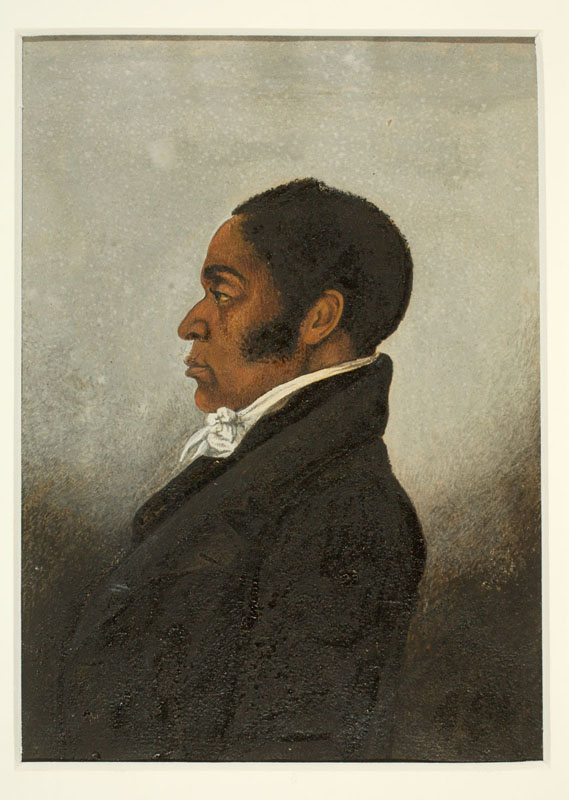
Profile №4 BEHI-P004-JF
James Forten
1766–1842
Sailmaker, Business Owner, Abolitionist
Overview
TAKEAWAY: Forten built a sailmaking enterprise connecting skilled manufacturing, employment, and civil rights. Contemporary workshop testimony is not an audited account of earnings.
BEHI PROFILE — RESEARCH IN PROGRESS — UPDATED NOVEMBER 4, 2026. EVIDENCE IS CLASSIFIED CLAIM BY CLAIM; ATTRIBUTED ACCOUNTS AND UNRESOLVED RESEARCH QUESTIONS ARE IDENTIFIED THROUGHOUT.
WHY HE IS IN THE RECORD
James Forten built a Philadelphia sailmaking enterprise that joined skilled manufacturing, employment, and the struggle for Black civil rights.
A December 1835 account describes his workshop and an integrated workforce. The account is contemporary testimony, rather than an audited statement of earnings.
Source: “A Noble Example,” The Anti-Slavery Record, December 1835; National Humanities Center transcription.
An enterprise joining productive work and civic action
Skilled manufacturing
The sailmaking establishment supplied a maritime trade. Contemporary workshop testimony gives a view of production rather than only a retrospective account of personal success.
Ownership & continuity
Institutional chronology traces a path from training to foremanship and ownership. Later succession raises its own questions about family, partners, assets, and agreements.
Employment & opportunity
The visitor describes Black and white workers together. Forten’s own letter advocates access to trade training, connecting an operating business with an argument about opportunity.
Civic relationships
Antislavery writing, publication support, and family organizing place economic activity within a wider civic record. Each contribution amount still needs its own evidence.
BEHI enterprise map based on NHC transcription of the 1835 workshop account, Museum of the American Revolution chronology, NPS transcription of the 1831 Garrison letter, and NPS Forten account. Source classifications remain unchanged; the connections are interpretation rather than a quantified economic-impact total.
EXACT ACCOMPLISHMENTS
Operated a sailmaking enterprise.
A contemporary observer described Black and white workers together.
Supported abolitionist organizing and publication.
What Would Move This Profile Forward?
These are the next evidence priorities for strengthening this Profile. Each identifies a concrete research step and what it could help establish.
- Document the 1798 business succession
Recover the acquisition agreement, financing papers and related correspondence. These would establish the terms on which Forten took over the sail loft.
- Establish operating results and net estate
Acquire business ledgers, the complete 1842 probate packet, liabilities and the identified 1832 tax record. These would separate sales, expenses, property assessments and personal estate value.
- Extend the documented Cuffe transaction
Locate additional original correspondence, invoices and vessel accounts around the inspected September 20, 1815 paid supply bill. These would test the duration and scale of the commercial relationship beyond that single transaction.
- Recover the heirs’ transfer agreement
Seek the executed agreement and related accounts for the Anthony–Bolivar succession. These would establish the parties, date, assets and consideration behind the scholarly account.
Read the Research Gaps & Open Questions for the unresolved issues and evidence limits. New material is reviewed before claims or classifications change.
THE RECEIPTS OR EVIDENCE SUPPORTING THIS PROFILE
Evidence labels apply to individual claims. Read the evidence guide and content-condition definitions.
| SOURCE / LOCATOR | RECORD / CONTEXT | DATE / PERIOD | EVIDENCE STATUS | SUPPORT / LIMITS |
|---|---|---|---|---|
| A Noble Example | Contemporary publication / transcription | December 1835 | ATTRIBUTED | Observer testimony; workforce estimates are not payroll. |
| Museum of the American Revolution | Institutional interpretation | Modern interpretation | ATTRIBUTED | Chronology attributed; original succession agreement pending. |
| Julie Winch, business-history article | Secondary scholarship | 1997 | ATTRIBUTED | Underlying apprenticeship, sale, and financial papers sought. |
| National Park Service | Institutional interpretation | Updated 2024 | ATTRIBUTED | Civic and family history; contribution amounts unresolved. |
Newly inspected maritime evidence
An inspected September 20, 1815 bill names James Forten and Captain Paul Cuffe for Brig Traveller, lists canvas and Ravens duck, totals $51.25, and acknowledges payment in full. It documents a specific commercial transaction; partnership, vessel ownership and annual earnings do not follow from this bill. Read the source readings, citations and limits.
AUDIT SCOPE
Forten’s profile distinguishes business testimony, his own civic writing, institutional interpretation, and archival leads. Reported wealth, sales, acquisition terms, and patent claims remain unresolved until the underlying records can be checked.
Background
TAKEAWAY: Institutional accounts trace Forten’s path through wartime service, apprenticeship, and succession to a sail loft. These accounts retain their stated source attribution.
EARLY LIFE & ORIGINS
Forten was born free in Philadelphia in 1766. His experience included Revolutionary War privateering and British imprisonment.
The Museum of the American Revolution places his return from London and apprenticeship with Robert Bridges in 1785. He advanced to foreman before succeeding Bridges.
Source: Museum of the American Revolution, Black Founders: Big Idea 4.
Training, responsibility, and ownership
Maritime experience
Institutional accounts place privateering and imprisonment in Forten’s early life. Those experiences precede the sail-loft business and retain their source attribution.
Apprenticeship · 1785
The museum dates his return and apprenticeship with Robert Bridges to 1785. An apprenticeship instrument could establish the specific terms and duties.
Foremanship
The institutional account describes advancement before ownership. A foreman’s workplace responsibilities and an owner’s financial interests are distinct roles.
Succession · 1798
The museum dates his assumption of the loft to 1798. The purchase price, credit, property interests, and assets transferred require the underlying agreement.
Pathway diagram: Museum of the American Revolution chronology; business context: Winch’s business-history article. This is an attributed chronology, not a reconstructed purchase or financing contract.
HISTORICAL & ECONOMIC CONTEXT
Forten’s enterprise made and repaired sails for maritime customers.
Institutional accounts trace his progression from apprenticeship and foremanship to ownership.
The NPS account connects Forten’s business standing with antislavery support; contribution amounts remain unverified here.
FORMATIVE EXPERIENCES
Born free in Philadelphia, according to institutional accounts.
Privateering and imprisonment form part of the institutional account of his early life.
The museum dates his return and apprenticeship with Robert Bridges to 1785.
The museum dates his takeover of Bridges’s sail loft to 1798; financial terms remain unresolved.
A published visitor’s account describes the sailmaking establishment and its integrated workforce.
Forten’s enterprise made and repaired sails for maritime customers.
Institutional accounts trace his progression from apprenticeship and foremanship to ownership.
The NPS account connects Forten’s business standing with antislavery support; contribution amounts remain unverified here.
PLACES, PEOPLE & INFLUENCES
| CATEGORY | NAME / PLACE | ROLE IN BACKGROUND | NOTES |
|---|---|---|---|
| Place | Philadelphia | Home and business setting | Institutional accounts and contemporary testimony. |
| Mentor / employer | Robert Bridges | Sailmaking apprenticeship and succession | Museum interpretation; original agreement sought. |
| Business correspondent | Paul Cuffe | Customer and correspondent | Winch’s scholarship; transaction amounts unresolved. |
| Family / civic network | Charlotte and the Forten daughters | Antislavery organizing | NPS interpretation of the 1833 founding. |
FROM TRAINING TO OWNERSHIP
The Museum of the American Revolution places Forten’s apprenticeship with Robert Bridges in 1785 and his assumption of the business in 1798. This chronology does not establish a purchase price or financing agreement. Forten’s later correspondence provides direct evidence of his concern for access to skilled trades.
The Problem
TAKEAWAY: Forten’s business faced barriers to resources and skilled-trade access under racial exclusion. The underlying letters and notices cited by scholarship remain research priorities.
ACCESS TO SKILL, CREDIT & TRUST
Business ownership required customers, materials, trained workers, and credit. Racial exclusion made those resources harder to obtain.
Julie Winch’s research documents resistance around Forten’s succession and his concern that Black young people were excluded from skilled trades. BEHI treats these as attributed scholarly findings while pursuing the letters and contemporary notices cited in the article.
Source: Julie Winch, Business and Economic History 26, no. 1 (1997), pp. 216–217.
Forten connected skilled training with economic access
Learning a trade
His February 23, 1831 letter favors apprenticeship opportunities for Black children. It gives direct evidence of his proposed direction for resources.
Removing exclusion
The letter joins education and access to skilled work with opposition to removing free Black Americans to Africa. Economic opportunity is part of his civic argument.
Keeping a business viable
A loft also needed materials, trained workers, customers, and credit. Scholarship provides leads to those relationships; original transactions remain to be examined.
Advocacy versus implementation
The proposal establishes what he urged, not a completed apprenticeship fund, a payment by him, or a count of beneficiaries.
Primary-text route: NPS transcription of the 1831 Garrison letter, identifying the Boston Public Library manuscript. BEHI reviewed the hosted transcription; the manuscript image has not been independently inspected in this audit. Business relationships: Winch’s business-history article.
DIMENSIONS OF THE PROBLEM
Winch documents barriers to skilled training and resistance surrounding succession.
Institutional interpretation emphasizes maintaining customers and employees during the ownership change.
Sailmaking required materials, experienced workers, and coordination.
HOW THE PROBLEM SHOWED UP
Winch documents barriers to skilled training and resistance surrounding succession.
Institutional interpretation emphasizes maintaining customers and employees during the ownership change.
Sailmaking required materials, experienced workers, and coordination.
The precise acquisition price, credit arrangements, and business accounts remain research targets.
Winch documents barriers to skilled training and resistance surrounding succession.
Institutional interpretation emphasizes maintaining customers and employees during the ownership change.
Sailmaking required materials, experienced workers, and coordination.
PROBLEM CONTEXT, SOURCES & INTERPRETATION
| SOURCE | DESCRIPTION | DATE | EVIDENCE CLASSIFICATION | NOTES |
|---|---|---|---|---|
| A Noble Example | Contemporary publication / transcription | December 1835 | ATTRIBUTED | Observer testimony; workforce estimates are not payroll. |
| Museum of the American Revolution | Institutional interpretation | Modern interpretation | ATTRIBUTED | Chronology attributed; original succession agreement pending. |
| Julie Winch, business-history article | Secondary scholarship | 1997 | ATTRIBUTED | Underlying apprenticeship, sale, and financial papers sought. |
| National Park Service | Institutional interpretation | Updated 2024 | ATTRIBUTED | Civic and family history; contribution amounts unresolved. |
FORTEN’S OWN WORDS ON OPPORTUNITY
In his letter to William Lloyd Garrison of February 23, 1831, Forten argued that money devoted to colonization could instead support masters taking Black children as apprentices. He connected education and learning a trade with improving their prospects in the United States.
Evidence: NPS-hosted transcription of Forten’s letter, identifying the Boston Public Library manuscript. The transcription was reviewed; the original three-page manuscript was not independently inspected in this audit.
What He Built
TAKEAWAY: Forten operated a sailmaking workshop serving maritime commerce. Contemporary descriptions of improvements do not establish a specific patented invention.
A SAILMAKING ENTERPRISE
Forten’s business made and repaired sails for the maritime economy. The museum dates his takeover of Bridges’s loft to 1798 and reports continued ownership until his death in 1842.
The December 1835 visitor describes several lofts, work on canvas, and improvements demonstrated by the owner. This supports a working manufacturing establishment; it does not establish a specific patented invention.
Source: Museum of the American Revolution, Big Idea 4.
Source: “A Noble Example,” December 1835.
A sail loft within a maritime business network
Production
The workshop account describes work on canvas in several lofts. It provides a contemporary view of an operating manufacturing establishment.
People
Workers supplied skill and labor; the account describes an integrated workplace. Personnel, pay, training, and complete staffing require other records.
Customers & credit
Winch identifies relationships involving Paul Cuffe, Willing & Francis, and Patrick Hayes. These are routes to commercial correspondence rather than a complete customer list.
Ownership & premises
A business could include equipment, inventory, receivables, property interests, and obligations. The succession instruments would establish which of these actually changed hands.
BEHI operating map based on NHC transcription of the 1835 workshop account, Winch’s business-history article, and Museum of the American Revolution chronology. It identifies economic questions without inventing the loft’s inventory, contracts, or division of responsibilities.
THE SYSTEM HE CREATED
Made and repaired sails for the maritime economy.
The museum reports ownership from 1798 until 1842; the acquisition agreement remains uninspected.
The 1835 observer describes Black and white workers together.
The NPS identifies support for The Liberator and antislavery organizing; no contribution total is established here.
HOW THE BUSINESS WAS STRUCTURED
Made and repaired sails for the maritime economy.
The museum reports ownership from 1798 until 1842; the acquisition agreement remains uninspected.
The 1835 observer describes Black and white workers together.
The NPS identifies support for The Liberator and antislavery organizing; no contribution total is established here.
Made and repaired sails for the maritime economy.
The museum reports ownership from 1798 until 1842; the acquisition agreement remains uninspected.
The 1835 observer describes Black and white workers together.
CORE ELEMENTS OF THE ENTERPRISE — EVIDENCE
| SOURCE | DESCRIPTION | DATE | EVIDENCE CLASSIFICATION | NOTES |
|---|---|---|---|---|
| A Noble Example | Contemporary publication / transcription | December 1835 | ATTRIBUTED | Observer testimony; workforce estimates are not payroll. |
| Museum of the American Revolution | Institutional interpretation | Modern interpretation | ATTRIBUTED | Chronology attributed; original succession agreement pending. |
| Julie Winch, business-history article | Secondary scholarship | 1997 | ATTRIBUTED | Underlying apprenticeship, sale, and financial papers sought. |
| National Park Service | Institutional interpretation | Updated 2024 | ATTRIBUTED | Civic and family history; contribution amounts unresolved. |
CUSTOMERS, CREDIT & WORKSHOP PRACTICE
Winch’s research identifies Paul Cuffe, Willing & Francis, and Patrick Hayes among the relationships connecting Forten’s shop to maritime commerce. These are leads for correspondence and vessel accounts, rather than a reconstructed customer ledger.
The 1835 workshop text reports several lofts and improvements introduced in the trade. Its modern editorial footnote adds specific invention claims; that footnote is not contemporary proof of a patent.
Accomplishments
TAKEAWAY: An 1835 observer described an integrated workshop and estimated its workforce. These observations support employment history, not a verified payroll census or every worker’s outcome.
WORK, OWNERSHIP & OPPORTUNITY
The 1835 account describes approximately 20–30 workers in one loft and recalls that about half were Black. Those are an observer’s estimates, not a payroll census.
The same visitor describes long-serving employees and improvements in their circumstances. These observations help document employment and skill-building without proving the outcomes of every worker.
Source: “A Noble Example,” December 1835.
The visitor’s workforce estimate: approximately 20–30
People observed in one loft, during the reported 1834 visit.
Shaded band locates the observer’s rough range on a zero-to-30 scale. It is not a statistical confidence interval, a verified headcount, or a comparison between years.
Observed workshop
The December 1835 publication describes a visit the previous year. Publication and observation belong to different dates.
Integrated employment
The recollection that about half were Black is approximate. It does not justify exact racial counts or a precise composition pie chart.
Limits of testimony
The unidentified writer’s account is contemporary testimony. Payroll, staff registers, and wage records would answer different questions.
Source: NHC transcription of the 1835 workshop account, “A Noble Example,” The Anti-Slavery Record, December 1835, signed “W.” Attributed estimate, one loft; original issue facsimile and payroll not inspected. The profile does not identify the writer as Garrison without evidence.
ACCOMPLISHMENT LEDGER
Made and repaired sails for the maritime economy.
The museum reports ownership from 1798 until 1842; the acquisition agreement remains uninspected.
The 1835 observer describes Black and white workers together.
The NPS identifies support for The Liberator and antislavery organizing; no contribution total is established here.
Made and repaired sails for the maritime economy.
The museum reports ownership from 1798 until 1842; the acquisition agreement remains uninspected.
The 1835 observer describes Black and white workers together.
ACCOMPLISHMENT CATEGORIES
Made and repaired sails for the maritime economy.
The museum reports ownership from 1798 until 1842; the acquisition agreement remains uninspected.
The 1835 observer describes Black and white workers together.
The NPS identifies support for The Liberator and antislavery organizing; no contribution total is established here.
EVIDENCE SUPPORTING THESE ACCOMPLISHMENTS
| SOURCE | DESCRIPTION | DATE | EVIDENCE CLASSIFICATION | NOTES |
|---|---|---|---|---|
| A Noble Example | Contemporary publication / transcription | December 1835 | ATTRIBUTED | Observer testimony; workforce estimates are not payroll. |
| Museum of the American Revolution | Institutional interpretation | Modern interpretation | ATTRIBUTED | Chronology attributed; original succession agreement pending. |
| Julie Winch, business-history article | Secondary scholarship | 1997 | ATTRIBUTED | Underlying apprenticeship, sale, and financial papers sought. |
| National Park Service | Institutional interpretation | Updated 2024 | ATTRIBUTED | Civic and family history; contribution amounts unresolved. |
WHAT THE WORKFORCE ACCOUNT MEASURES
The account signed “W” appeared in December 1835 but describes a visit “last year,” placing the reported visit in 1834. Its estimate of 20 or 30 people concerns one loft; the recollection that about half were Black is approximate. Neither figure is a payroll count or an annual employment total. The writer’s identity remains unresolved.
Economic Impact
TAKEAWAY: Forten’s enterprise supported maritime production and skilled work. Business earnings and particular civic contributions require financial records beyond general accounts of his influence.
MANUFACTURING & CIVIC SUPPORT
Sailmaking supplied an essential component of shipping. BEHI’s interpretation is that Forten’s enterprise belongs in the history of productive industry and skilled employment.
The National Park Service describes his support for William Lloyd Garrison’s Liberator and antislavery organizing. The amounts and dates of particular contributions require receipts or correspondence.
Published wealth estimates are not entered here as verified revenue, profit, or net worth.
Source: National Park Service, Portrait of James Forten, 1818.
Four channels of activity, with different measures
Maritime supply
Making and repairing sails placed the shop in productive industry. Orders, quantities, and vessel accounts could measure output and customer relationships.
Employment
The workshop account provides an approximate observation. Payroll and apprenticeship records would be needed for wages, duration, and annual staffing.
Capital & property
Scholarship points to investment and credit questions. Deeds, tax, debt, and probate records must separate business assets from personal property.
Civic support
Institutional accounts describe support for abolitionist publication and organizing. Letters and receipts are required to establish particular amounts and payment dates.
BEHI economic map grounded in NHC transcription of the 1835 workshop account, Winch’s business-history article, and NPS Forten account. Financial totals remain unresolved. Output, wages, business receipts, profit, estate value, and charitable payments are not interchangeable measures.
KEY ECONOMIC INDICATORS
Each measure identifies its entity, period, source and evidence limits. Dollar amounts are nominal historical U.S. dollars. Assets, revenue, profit, transaction amounts and employment measures are distinct. “Not yet established” identifies a research gap, not zero or “not applicable.”
| MEASURE / VALUE | ENTITY / PERIOD | SOURCE / LOCATOR | CONTENT CONDITION / EVIDENCE CLASSIFICATION | INTERPRETATION / LIMITS |
|---|---|---|---|---|
| Reported workforce Approximately 20–30 | Forten sailmaking enterprise December 1835 | A Noble Example; National Humanities Center transcription cited below. | Documented ATTRIBUTED | Observer’s account, not a payroll census or annual employment series. |
| Annual revenue and profit Not yet established | Forten sailmaking enterprise Reporting period not established | Research gap; see Evidence & Context and Receipts. | Not yet established Evidence classification: not assigned to an unresolved answer. | Requires operating accounts, expenses and dated reporting periods. Research Gap: Annual revenue and profit |
| Net estate value Not yet established | James Forten estate Reporting period not established | Research gap; see Evidence & Context and Receipts. | Not yet established Evidence classification: not assigned to an unresolved answer. | Requires inventory, liabilities and estate accounting; business scale is not personal wealth. Research Gap: Net estate value |
For evidence-label definitions, see the Receipts evidence guide.
HOW THE ENTERPRISE GENERATED IMPACT
Made and repaired sails for the maritime economy.
The museum reports ownership from 1798 until 1842; the acquisition agreement remains uninspected.
The 1835 observer describes Black and white workers together.
The NPS identifies support for The Liberator and antislavery organizing; no contribution total is established here.
Made and repaired sails for the maritime economy.
The museum reports ownership from 1798 until 1842; the acquisition agreement remains uninspected.
The 1835 observer describes Black and white workers together.
CHANNELS OF ECONOMIC IMPACT
Made and repaired sails for the maritime economy.
The museum reports ownership from 1798 until 1842; the acquisition agreement remains uninspected.
The 1835 observer describes Black and white workers together.
The NPS identifies support for The Liberator and antislavery organizing; no contribution total is established here.
EVIDENCE SUPPORTING THIS ECONOMIC IMPACT
| SOURCE | DESCRIPTION | DATE | EVIDENCE CLASSIFICATION | NOTES |
|---|---|---|---|---|
| A Noble Example | Contemporary publication / transcription | December 1835 | ATTRIBUTED | Observer testimony; workforce estimates are not payroll. |
| Museum of the American Revolution | Institutional interpretation | Modern interpretation | ATTRIBUTED | Chronology attributed; original succession agreement pending. |
| Julie Winch, business-history article | Secondary scholarship | 1997 | ATTRIBUTED | Underlying apprenticeship, sale, and financial papers sought. |
| National Park Service | Institutional interpretation | Updated 2024 | ATTRIBUTED | Civic and family history; contribution amounts unresolved. |
PROPERTY & CAPITAL: CLAIMS AND LIMITS
Scholarship points to property, investments, and credit beyond the sailmaking shop. The underlying probate, tax, and debt records are needed to distinguish estate valuation from business revenue or profit.
No estate total, modern equivalent, wealth ranking, or quantified economic multiplier is adopted here. The earlier research leads remain open rather than becoming verified financial statements.
Timeline
TAKEAWAY: The timeline follows Forten’s life, workshop, and civic activity through dated accounts. Institutional chronology and contemporary testimony retain different evidentiary roles.
DATED MILESTONES
- 1766: Born in Philadelphia.
- 1785: Museum account places his return and apprenticeship with Bridges.
- 1798: Took over the sail loft, according to the museum.
- December 1835: Publication of “A Noble Example.”
- 1842: Forten died; the museum reports succession by two sons.
Source: Museum of the American Revolution, Big Idea 4.
Source: The Anti-Slavery Record, December 1835.
Life, enterprise, and the dates of the evidence
- 1766
Philadelphia origins
Birth year in institutional accounts.
- 1785
Training
Museum dates return and apprenticeship with Bridges.
- 1798
Business succession
Museum chronology; original terms remain uninspected.
- February 1831
Trade opportunity
Letter advocates education and apprenticeships.
- 1833
Family organizing
NPS identifies Charlotte and daughters among society founders.
- 1834 / December 1835
Visit / publication
Approximate workforce account published after the reported visit.
- 1842
Death & family succession
Museum reports subsequent leadership by sons.
- Later 1840s
Anthony–Bolivar succession
Scholarly account; precise date and agreement unresolved.
Source key: Museum of the American Revolution chronology; NPS transcription of the 1831 Garrison letter; NPS Forten account; NHC transcription of the 1835 workshop account; Winch’s business-history article. Chronology preserves attribution, transcription scope, and posthumous stages rather than assigning every later event to Forten personally.
Born free in Philadelphia, according to institutional accounts.
Privateering and imprisonment form part of the institutional account of his early life.
The museum dates his return and apprenticeship with Robert Bridges to 1785.
PHASES OF DEVELOPMENT
Born free in Philadelphia, according to institutional accounts.
Privateering and imprisonment form part of the institutional account of his early life.
The museum dates his return and apprenticeship with Robert Bridges to 1785.
EVIDENCE SUPPORTING THIS TIMELINE
| SOURCE | DESCRIPTION | DATE | EVIDENCE CLASSIFICATION | NOTES |
|---|---|---|---|---|
| A Noble Example | Contemporary publication / transcription | December 1835 | ATTRIBUTED | Observer testimony; workforce estimates are not payroll. |
| Museum of the American Revolution | Institutional interpretation | Modern interpretation | ATTRIBUTED | Chronology attributed; original succession agreement pending. |
| Julie Winch, business-history article | Secondary scholarship | 1997 | ATTRIBUTED | Underlying apprenticeship, sale, and financial papers sought. |
| National Park Service | Institutional interpretation | Updated 2024 | ATTRIBUTED | Civic and family history; contribution amounts unresolved. |
ADDITIONAL DATED EVIDENCE
February 23, 1831: Forten writes Garrison advocating trade apprenticeships and opposing removal of free Black Americans to Africa; transcription reviewed.
1834 / December 1835: Workshop visit described retrospectively in the published “A Noble Example.” Publication date and visit date are distinct.
After 1842: Scholarship attributes a later transfer from the Forten heirs to Charles Anthony, George W. Bolivar, and another partner in the 1840s. The agreement and exact date remain unverified.
CHRONOLOGICAL RECORD
-
1785
1785 — Forten returns and apprentices with Bridges
James Forten
Museum interpretation places Forten’s return from London and apprenticeship with Robert Bridges in 1785. Original apprenticeship agreement not yet inspected. -
1798
1798 — Forten takes over the sail loft
James Forten
Museum interpretation dates succession to 1798. Purchase price and financing terms remain unresolved. -
1835-12
1835 — Contemporary account of Forten’s workshop
James Forten
The Anti-Slavery Record publishes A Noble Example in December 1835. The inspected National Humanities Center transcription describes an integrated sailmaking workshop.
Myths & Disputes
TAKEAWAY: Claims about a patented invention or exact fortune remain unresolved. Workshop improvements, estate values, and business income cannot be treated as equivalent evidence.
CLAIMS THAT NEED QUALIFICATION
Was every sailmaking improvement patented?
The contemporary account mentions improvements but supplies no patent number. A patent claim remains unresolved.
Do published fortune estimates establish net worth?
No inspected estate inventory or reconciliation is attached to this draft. Asset valuations, debts, and business income must be distinguished.
Is the familiar portrait conclusively identified?
Institutional descriptions differ in attribution and dating. The image must retain the repository’s qualification and credit.
What needs its own receipt
Evidence-check chart based on the existing audit, NHC transcription of the 1835 workshop account, and the portrait/source notes below. A source’s editorial apparatus and the original historical text must remain distinct.
Winch documents barriers to skilled training and resistance surrounding succession.
Institutional interpretation emphasizes maintaining customers and employees during the ownership change.
Sailmaking required materials, experienced workers, and coordination.
COMMON SOURCES OF CONFUSION
Property valuations, turnover, profits, and net worth require different records.
A repository description or scholarly reference is attributed rather than automatically verified.
A workshop improvement is not proof of a patent.
Names, dates, and portrait attributions must retain their source qualifications.
IDENTITY & SOURCE GUARDS
James Forten died in 1842. The later Philadelphia Vigilant Committee minutes name Robert Forten; his committee activity must not be assigned to James.
The selected portrait’s identification, artist, and date remain qualified. The Library Company describes a presumed Forten portrait tentatively associated with Robert Douglass Jr., circa 1834, while NPS labels an image circa 1818. These descriptions have not been reconciled against the repository catalog.
Claim Review & Corrections
| CLAIM / ASSERTION | HISTORICAL CLARIFICATION & CORRECTION | CLAIM STATUS | RECEIPT |
|---|---|---|---|
|
◆
A contemporary observer described Black and white workers employed together in Forten’s sailmaking establishment.
|
The reviewed NHC transcription describes several lofts and estimates 20–30 workers in one loft, approximately half Black. Published in December 1835, it describes a visit the previous year (1834). These are a visitor’s estimates, not payroll totals. The author signs W; authorship is unresolved. The original periodical facsimile has not been inspected. |
Attributed | |
|
◆
The Museum of the American Revolution dates Forten’s takeover of Robert Bridges’s sailmaking business to 1798.
|
Institutional interpretation supports the draft chronology. It is not the transfer agreement and does not establish the acquisition price or financing terms. |
Attributed | |
|
◆
Winch reports that Charles Anthony and George Bolivar bought the sailmaking business from Forten’s heirs in the 1840s.
|
This is an attributed retrospective purchase account. The inspected passage describes Anthony joining Bolivar and another Forten apprentice; its wording does not securely identify Bolivar himself as an apprentice. The original transaction date, price, financing, ownership shares, and Bolivar’s training remain unresolved. |
Attributed | |
|
◆
Forten’s antislavery support and family organizing
“The National Park Service identifies Forten’s support for The Liberator and his wife and daughters’ participation in founding the Philadelphia Female Anti-Slavery Society in 1833.”
|
Modern National Park Service interpretation supports the civic narrative. Original correspondence and contribution amounts have not been inspected. The portrait title/date in this article are not treated as resolving conflicting portrait catalog descriptions. |
Attributed |
Legacy
TAKEAWAY: Forten’s legacy connects enterprise with family and antislavery organizing. The reported transfer to Anthony and Bolivar still awaits the original agreement and exact date.
ENTERPRISE & THE FORTEN FAMILY
Forten’s legacy connects business ownership to civic action. His wife Charlotte and daughters Margaretta, Harriet, and Sarah were among the founders of the Philadelphia Female Anti-Slavery Society in 1833, according to the National Park Service.
Winch reports that Charles Anthony and George Bolivar later bought the sailmaking business from Forten’s heirs. That attributed succession connects this profile with Profile №3 — George W. Bolivar; the transfer document and exact date remain research targets.
Source: National Park Service.
Source: Winch (1997), p. 217.
Business, family, and successive owners
James’s enterprise
The manufacturing and employment account belongs to his business career. It supports studying economic participation without requiring an unverified fortune ranking.
Charlotte & daughters
Charlotte, Margaretta, Harriet, and Sarah have their own civic roles in the institutional account of the Philadelphia Female Anti-Slavery Society. Family participation is not assigned solely to James.
Heirs & successors
The museum’s family succession and Winch’s later Anthony–Bolivar account describe different stages. Directory evidence for the later firm does not establish a transfer price or date.
An enduring research question
Letters, agreements, and accounts could explain how knowledge, capital, and relationships continued. That history depends on identifying the people and assets in each stage.
BEHI succession map based on Museum of the American Revolution chronology, NPS Forten account, and Winch’s business-history article. Bolivar’s linked profile supplies the later directory evidence; the original sale instrument remains a research target.
ENDURING LEGACY
The enterprise documents Black participation in skilled manufacturing.
Contemporary testimony offers evidence of Black and white employees working together.
NPS identifies Charlotte and the Forten daughters among the 1833 society’s founders.
Winch reports the later Anthony–Bolivar purchase from Forten’s heirs; original terms remain unresolved.
The enterprise documents Black participation in skilled manufacturing.
Contemporary testimony offers evidence of Black and white employees working together.
NPS identifies Charlotte and the Forten daughters among the 1833 society’s founders.
CHANNELS OF LEGACY
The enterprise documents Black participation in skilled manufacturing.
Contemporary testimony offers evidence of Black and white employees working together.
NPS identifies Charlotte and the Forten daughters among the 1833 society’s founders.
Winch reports the later Anthony–Bolivar purchase from Forten’s heirs; original terms remain unresolved.
EVIDENCE SUPPORTING THIS LEGACY
| SOURCE | DESCRIPTION | DATE | EVIDENCE CLASSIFICATION | NOTES |
|---|---|---|---|---|
| A Noble Example | Contemporary publication / transcription | December 1835 | ATTRIBUTED | Observer testimony; workforce estimates are not payroll. |
| Museum of the American Revolution | Institutional interpretation | Modern interpretation | ATTRIBUTED | Chronology attributed; original succession agreement pending. |
| Julie Winch, business-history article | Secondary scholarship | 1997 | ATTRIBUTED | Underlying apprenticeship, sale, and financial papers sought. |
| National Park Service | Institutional interpretation | Updated 2024 | ATTRIBUTED | Civic and family history; contribution amounts unresolved. |
SUCCESSION WITHOUT AN INVENTED CONTRACT
The museum’s account of family succession and scholarship’s account of Anthony–Bolivar ownership describe different stages. The 1849 and 1850 directories inspected for Bolivar establish the later firm’s existence, not the purchase price, transfer date, or assets inherited from Forten.
Forten’s 1831 letter also connects his civic work to a practical program of education and apprenticeships. It is evidence of his advocacy, not proof that a particular apprenticeship fund was implemented.
Company Records
TAKEAWAY: Contemporary workshop testimony, institutional interpretation, and scholarship are available. A financial ledger, patent, acquisition agreement, and estate inventory have not been inspected for this profile.
WHAT THE RECORDS CAN ESTABLISH
Understanding the record counts: Show All includes four linked sources: one Operational workshop account, two institutional interpretations, and one scholarly article. The last three support the profile but have no company-record category. Category counts need not add up to Show All; a record may also appear in more than one category.
The evidence packet includes contemporary workshop testimony, institutional interpretation, and historical scholarship. These sources are labeled by type.
No financial ledger, patent, acquisition agreement, or estate inventory has yet been inspected for this profile. Those categories should remain empty until relevant records are obtained; a biography is not a company financial statement.
Match each business question to the required record
Formation & succession
Purchase agreements, partnership terms, and estate instruments could establish parties, dates, obligations, and assets. Institutional chronology supplies a route to those originals.
Financial reconciliation
Ledgers, invoices, tax entries, debt schedules, and probate would allow comparison of receipts, costs, personal assets, and liabilities at stated dates.
Operations & people
Workshop testimony supplies an observed scene. Payroll, apprenticeship registers, orders, and customer letters would establish staffing and transactions.
Rights & correspondence
Authenticated patent entries would test invention claims. Forten’s own civic letter establishes advocacy; commercial letters would address separate business dealings.
BEHI map to the permanent record framework. Existing linked-source counts and category audit remain below. Priority leads include Will Book 15, p. 445, No. 87 (1842); the New Market Ward 1832 tax entry; Forten–Breck correspondence; Cuffe letters; and the heirs’ transfer agreement. These are acquisition locators, not inspected accounts.
COMPANY RECORDS — CATEGORY AUDIT
| Category | Evidence and limit |
|---|---|
| Financial | No original ledger or reconciled financial statement inspected. |
| Operational | 1835 published workshop testimony reviewed through NHC transcription; visit reported in 1834. |
| Legal | Probate and litigation locators identified in scholarship; originals pending. |
| Marketing & Advertising | No original business advertisement inspected for this audit. |
| Correspondence | 1831 Garrison letter transcription reviewed; commercial correspondence remains to be inspected. |
| Intellectual Property | Improvements reported; no authenticated patent entry inspected. |
| Personnel | Approximate observer workforce account; no payroll or apprenticeship register inspected. |
| Other | Museum and NPS interpretations support chronology and civic context. |
| Ownership & Property | 1798 and later succession attributed; contracts, deeds, tax and estate originals pending. |
This table describes evidence coverage, not new attachments or changes to filter counts. The four linked records remain distinct from additional public research links.
ARCHIVAL CERTIFICATION & PUBLIC RECORD INTEGRITY
All company records presented in this repository have been cataloged according to the BEHI Company Records Classification System. Documents marked as Primary Sources are drawn from certified state and county archives, corporate filings, and recognized institutional repositories. Where physical scans are currently in the acquisition pipeline, verified archival metadata, source citations, and holding locators are provided to facilitate scholarly research.
| Document & ID | Evidence Type | Date | Description & Location | Source Repository | Action |
|---|---|---|---|---|---|
|
Forten’s workshop — A Noble Example (1835)
JF-S001
James Forten
|
Contemporary Publication
Business Operations · Operational
|
December 1835 |
The inspected transcription describes several lofts and estimates 20–30 workers in one loft. Workforce figures are estimates by a visitor...
|
||
|
Forten’s business succession — Museum interpretation
JF-S002
James Forten
|
Repository Authority
Contracts & Transactions
|
1798; modern interpretation |
Institutional interpretation supports the draft chronology. It is not the transfer agreement and does not establish the acquisition price...
|
||
|
Forten’s business network — Winch (1997)
JF-S003
James Forten
|
Secondary Scholarship
Contracts & Transactions
|
1997 |
The inspected scholarly article cites Minton (1913), p. 16, for the succession. The original agreement, exact transfer date, and terms re...
|
||
|
Forten’s antislavery support and family legacy — NPS interpretation
JF-S004
James Forten and the Forten family
|
Repository Authority
Reports & Correspondence
|
1833; modern interpretation |
Institutional account of Forten’s antislavery support and the family’s participation in organizing.
|
No verified records are currently published in this category.
Receipts
TAKEAWAY: Forten’s evidence supports a working sailmaking enterprise while leaving financial and succession questions open. HSP’s limited negative search does not establish that relevant records never existed.
RECEIPTS & EVIDENCE
HOW TO READ THE EVIDENCE
BEHI distinguishes economic interpretation from documented transactions. Unknown amounts and missing instruments remain open research questions.
Follow the claim to its source, then read the evidence status and limits. A source may support one narrow fact while leaving a larger conclusion unresolved.
Content condition describes whether the question can currently be answered. Evidence classification describes the support for a documented finding.
- Documented: A finding is presented with its source, evidence classification and limits. Documented does not automatically mean Verified.
- Not yet established: The answer remains unresolved. The entry identifies missing evidence and connects to Research Gaps.
- Not applicable: The measure does not fit the person or enterprise being examined; an explanation must state why. Missing evidence alone never makes a question not applicable.
Shared section headings remain visible. Relevance that is uncertain is treated as Not yet established until resolved.
Evidence labels and source access
- Verified
- The specific fact or record described has been checked against the cited material. Read the limit: an inspected reproduction, index or catalog entry does not mean every underlying document or broader claim has been verified.
- Attributed
- The statement is credited to the named source. Independent confirmation or the underlying original may still be outstanding.
- Disputed
- Sources or interpretations conflict. Read the competing evidence and the unresolved question.
- Estimated
- The figure is an approximation or qualified valuation, not an exact measured total. Read its basis, date and uncertainty.
- Institute Analysis
- BEHI’s interpretation or calculation from identified evidence. It is separate from what the historical source directly states.
Source access: A link may lead to an original scan, a published transcription, a finding aid, or a repository page. Use the source ID, collection, box, folder and page locator where supplied. A catalog listing or repository confirmation is not inspection of the item itself.
Images and permissions: Historical support and reproduction permission are separate questions. Read each image credit and rights note; a source link does not itself grant permission to republish.
Open questions: See Research Gaps & Open Questions below for missing records and unresolved claims.
The evidence below is classified by source type and by what was actually reviewed. Contemporary testimony, transcription, scholarship, and institutional interpretation are distinguished; unresolved claims remain attributed pending further evidence verification.
DOCUMENTS
James Forten supply bill — Captain Paul Cuffe for Brig Traveller
Source and review: Cuffe Collection, New Bedford Free Public Library; microfilm scans mounted on paulcuffe.org, digital file numbers assigned by the Town of Westport. BEHI visually inspected the linked files November 4, 2026. One file may contain several documents; digital file numbers are not assumed to be original manuscript item numbers.
Source image: Digital file 529, lower-left bill.
The September 20, 1815 bill names Captain Paul Cuffe for Brig Traveller and James Forten, lists canvas and Ravens duck, totals $51.25, and bears an acknowledgment of payment in full.
Evidence classification: Verified — limited to the inspected bill’s named parties, materials, total and paid acknowledgment. This supports a specific commercial transaction connecting Forten’s sailmaking business with Cuffe’s vessel. It does not establish co-ownership, a partnership, annual revenue, profit, or that all supplies were manufactured by Forten.
Image access and rights: Links open the host’s scans. Images are not copied or embedded here. The collection page requests written permission from New Bedford Free Public Library for reproduction; no new image-publication permission is asserted.
Five forms of evidence, five reading rules
Evidence map for the source-by-source audit below. For every new document, preserve complete pages, provenance, repository and call number, date, parties, and whether it is an original, copy, or transcription. Existing research gaps remain open to traceable contributions.
SOURCE REGISTER & EVIDENCE LIMITS
SOURCE-BY-SOURCE AUDIT
| Source | Reviewed basis | Limit |
|---|---|---|
| “A Noble Example,” December 1835 | NHC transcription of contemporary publication | Original issue facsimile not inspected; editorial header and footnote distinguished from historical text. |
| Forten to Garrison, February 23, 1831 | NPS transcription with Boston Public Library locator | Manuscript image not independently inspected; no contribution amount inferred. |
| Winch, Business and Economic History (1997), pp. 213–228 | Scholarly article | Commercial network and succession are attributed; cited manuscripts remain separate research leads. |
| Winch, Business History Review | Published reference locators | Probate: Will Book 15, p. 445, No. 87 (1842); tax: New Market Ward, 1832, p. 211. These originals were not inspected. |
RESEARCH GAPS & OPEN QUESTIONS
ECONOMIC INDICATORS — MISSING EVIDENCE
Annual revenue and profit
Content condition: Not yet established. Forten sailmaking enterprise
Reporting period not established
Evidence needed / present limit: Requires operating accounts, expenses and dated reporting periods.
Net estate value
Content condition: Not yet established. James Forten estate
Reporting period not established
Evidence needed / present limit: Requires inventory, liabilities and estate accounting; business scale is not personal wealth.
1. How was the 1798 succession financed?
Needed: acquisition agreement, loan papers, or business correspondence. Status: original terms not inspected.
2. What did the business earn, and what did the estate contain?
Needed: ledgers, probate inventory, debt schedules, and valuation reconciliation. Status: financial totals awaiting primary verification.
3. What transactions linked Forten and Paul Cuffe?
Winch identifies Cuffe as a customer and correspondent. Needed: original letters, invoices, and vessel accounts. Status: transaction amounts unresolved.
4. Which improvements can be documented?
Needed: dated drawings, descriptions, or authenticated patent entries. Status: contemporary improvements reported; specific patent claims unresolved.
5. When and on what terms did the heirs transfer the loft?
Needed: agreement naming the parties, date, consideration, and assets. Status: Anthony–Bolivar succession attributed to scholarship.
6. What is the portrait’s attribution and reproduction status?
Needed: repository catalog entry and reproduction terms. Status: portrait added with qualified identification. Selected reproduction is marked public domain by Wikimedia Commons; original held by the Historical Society of Pennsylvania. Library Company description attributes the portrait tentatively to Robert Douglass Jr., ca. 1834. Artist and dating require further catalog reconciliation.

This record remains open. If you hold a relevant document, contact BEHI with its source and provenance. Submissions enter our verification process before inclusion.
Source: Winch (1997).
RESEARCH UPDATES & RECONCILIATION
October 15, 2026 — Historical Society of Pennsylvania remote search
Evidence status: The limited search did not verify a Forten commercial link. It does not establish that no relevant records survive.
Read full note: HSP remote search — October 15, 2026
Research status: LIMITED SEARCH COMPLETED; COMMERCIAL LINK NOT VERIFIED. HSP researcher Mary Offenback completed a two-hour search for evidence linking James Forten's sail loft to the Willing and Francis enterprise or named vessels. In the Willings and Francis Records (Collection #1874), reviewed litigation and property material yielded no identified Forten transaction. In Wharton and Willing Families Papers (Collection #2014), Box 5 (January 1810–December 1812 material) yielded no direct Forten or sailmaking reference in the limited accounts and name checks performed; Box 4's January–June 1796 folder contained a historical list of company papers with no Forten, Robert Bridges, or sailmaking reference. Two 1811 accounts mentioning cables or ropes related to Nixon and Walker and Co.; they are not evidence of a Forten supply contract. These are bounded negative search results, not proof no relevant records survive.
Next research gap: selectively examine additional undigested correspondence and account folders in Collections #1874 and #2014, especially Boxes 4–5, subject to research priorities and reproduction costs. Source: HSP, Mary Offenback, remote research findings email, October 15, 2026 (BEHI correspondence; no new Forten-linked financial instrument verified).
Priority archival leads
Request the complete probate packet and debt schedules; the 1832 tax entry; PAS trade-register materials; Forten–Breck correspondence dated July 22, 1828; Cuffe business letters and vessel accounts; and the Forten-heirs transfer agreement. Earlier research identified these leads, but the original files were not recovered for this audit.
Cuffe collection access information identifies the New Bedford Free Public Library holdings. Check repository reproduction terms before attaching scans.
A contemporary observer described Black and white workers employed together in Forten’s sailmaking establishment.
Audited Historical Assertion
A contemporary observer described Black and white workers employed together in Forten’s sailmaking establishment.
BEHI Academic Analysis & Research Clarification
The reviewed NHC transcription describes several lofts and estimates 20–30 workers in one loft, approximately half Black. Published in December 1835, it describes a visit the previous year (1834). These are a visitor’s estimates, not payroll totals. The author signs W; authorship is unresolved. The original periodical facsimile has not been inspected.
Supporting Archival Receipts & Primary Sources
HOW TO READ THE RECEIPTS & ARCHIVAL CITATIONS
Evidence linked on this page may include primary archival records, contemporary sources, repository citations, authoritative secondary scholarship, and Institute analysis. Where a physical archival holding has been identified, BEHI provides repository and locator information when available.
Cite This Profile
The Black Economic History Institute (BEHI) Digital Archive